Ethiopia is a country that lies in Northeast Africa, with over 100 million inhabitants. Ethiopia is one of the poorest countries on earth, with about 44 percent of the population living in poverty. This is mainly caused by the effects of the economy revolving around agriculture.
The water footprint measures the appropriate amount of freshwater resources for producing goods and services (Water footprint Network, 2016).
It also measures the volume of water consumed or polluted, it tells us where and when water is used which allows it to be compared to the water available.
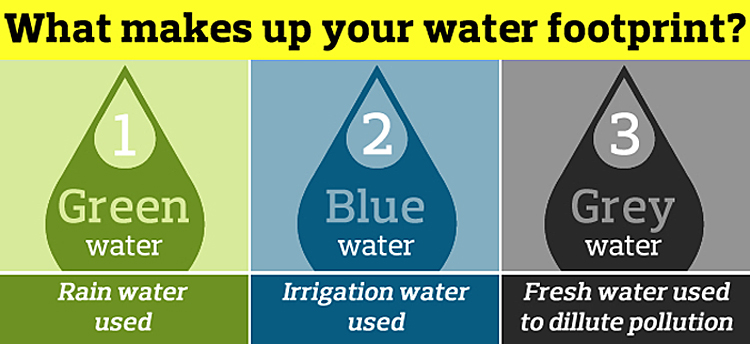
The water footprint can be measured for 3 components.
- Green water footprint: volume of rainwater evaporated or incorporated in a product.
- Blue water footprint: volume of surface or groundwater evaporated or incorporated in a product
- Grey water footprint: volume of water needed to meet water quality standards.
The total annual green and blue water footprint of production in Ethiopia is 77.2 billion m3.
Green water footprint:
98% of this is green water footprint, that is the use by plants of rainfall stored as soil moisture. The remaining 2% of the water footprint is the use of surface and groundwater for agriculture, industry and domestic water supply
75% of the annual green water footprint of agricultural production is consumed in crop production, while 25% is used for grazing.
98% of the annual green water footprint of production is for products used within Ethiopia while 2% is consumed in producing products for export.
Blue water footprint:
The total annual blue water footprint of production is 1.85 billion m3. Of this 34.5% is used for animal water supply, 63.6% is used for producing crops, 1.8% is used for domestic water supply and 0.1% is industrial water use.
The 3 major corps that are using blue water are:
- sugar cane
- cotton
- maize
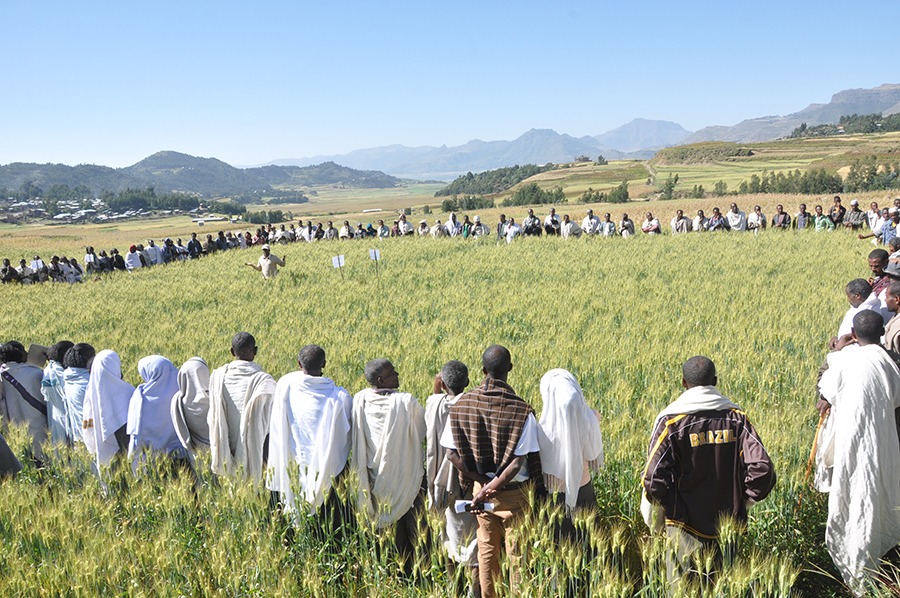
In Ethiopia, the water resources (green and blue water) are mainly consumed for crop production.
The green water footprint is primarily for domestic consumption while the blue water footprint is used more for export crops.
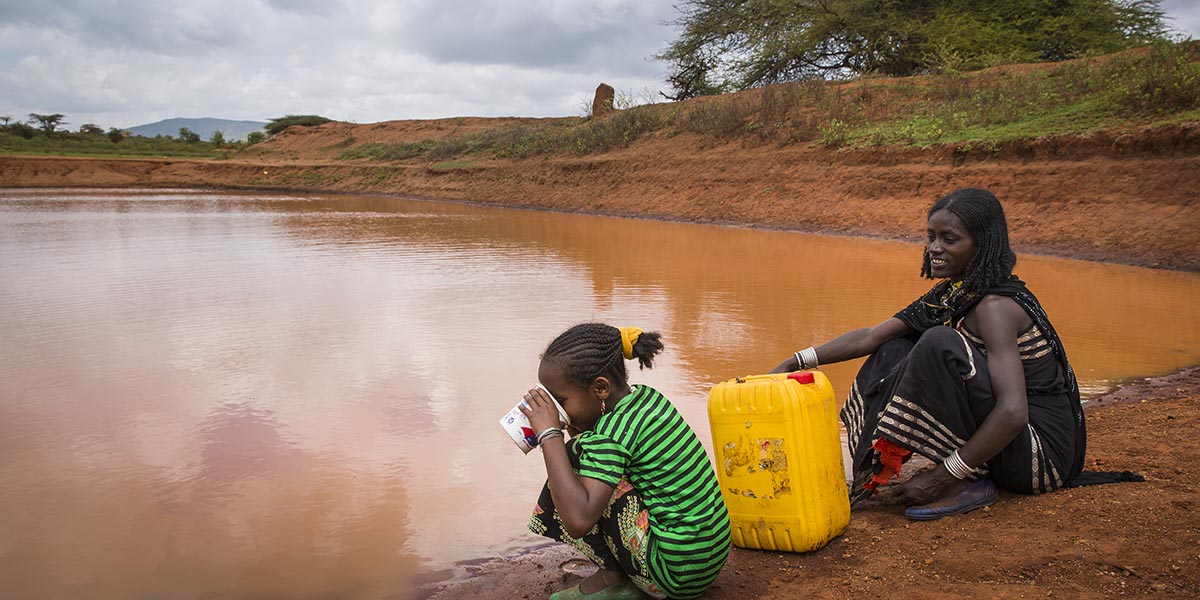
On average, the majority of Ethiopia has high blue water scarcity, meaning that its blue water consumption is unsustainable, with little consideration for environment flow requirements. This is mainly caused by uneducated and unawareness of climate change.
Ethiopia’s national consumption water footprint shows that the country has low external water dependency while its own blue water resources are under pressure (Water footprint Network, 2016).
Improving water and land productivity can improve water use sustainability and help ensure food security.
Source:
The source of the statistics and information in this week’s blog is by the Ministry of Foreign Affairs of the Netherlands, via Water Footprint Network.

 Global Challange: No Water No Food